


THE PADA-ICofA TEST
The PADA-ICofA test is conducted by an ethologist (behavioral biologist) specialized in cats and provides an objective, professional assessment of your cat’s innate personality.
The test consists of several components that, depending on how the cat reacts — or does not react — to specific environments, stimuli, or situations, reveal key personality traits such as (lack of) fearfulness, sociability, responsiveness to training, (lack of) aggression, boldness, activity level, and more.


WHY USE PADA-ICofA?
When is PADA-ICofA relevant?
Many behavioral traits can be subtle and difficult to detect. Even for experienced cat owners, it is not always easy to fully and objectively understand a cat’s behavior. This can affect the relationship, communication, the cat’s well-being, and may contribute to the development of problem behaviors.
By understanding your cat’s personality traits, you gain valuable insight into its motivations, the underlying causes of certain behaviors, and which environments or situations may be challenging. You also learn where your cat excels — and how to adapt daily routines to better support its comfort, confidence, and overall quality of life.
The many applications of PADA-ICofA:
-
Screening cats for breeding — to select animals with stable and desirable temperaments.
-
Understanding and managing problem behaviors — using personality insights to guide interventions.
-
Improving quality of life — by adapting the cat’s daily routines to suit its needs and preferences.
-
Strengthening communication and relationships — by gaining a deeper understanding of the cat’s behavior.
-
Assessing suitability for work — such as therapy or emotional support roles.
-
Supporting professionals — as a valuable tool for behaviorists, trainers, and veterinarians.
-
Providing documentation — of the cat’s personality traits and temperament.

PADA-ICofA
TEAM
Dennis Turner
Switzerland

Institute for applied Ethology and Animal Psychology
Dennis C. Turner received his doctorate from The Johns Hopkins University School of Hygiene and Public Health in Baltimore, then moved to Switzerland where he first became an Oberassistant in zoology, later with his Habilitation became a Priv.Doz. at the Vetsuisse Faculty of the University of Zurich. For some 30 years he was Head of the Companion Animal Ethology and Human-Animal Relations Group at the Zoology Institute of that University and was Head of the Companion Animal Behavior Clinic at the Animal Hospital for 10 years. He has been the president of IAHAIO (15 years) and received the first IAHAIO Lifetime Distinguished Fellow Award (2021), was founding secretary of ISAAT, is a co-founder and Fellow of ISAZ, has been co-editor of Anthrozoös and Animal Welfare, is co-editor of People and Animals. The International Journal of Research and Practice (PAIJ), has written or co-editored scholarly books on cats, chapters on AAI and co-edited Attachment to Pets, and authored over 100 peer-reviewed research articles, mostly on cats and the human-cat relationship. For eight years he was a Trustee and Head of the Scientific Advisory Panel of the World Society for the Protection of Animals (now WAP). In 2023 he recieved the Honoris Causa Doctorate from The University of Agricultural Sciences and Veterinary Medicine Cluj-Napoca, RO, and has been a team member in the Erasmus Plus (EU) project “Animals for People”.
Tahira Tarquini
Netherlands

Owner of Flow Coaching & Training
She offers educational material within AAI. She is educated in Animal Husbandry, Equine Business and Economics and Positive Psychology. She also specialised in (Systemic) Coaching, following Dog and Horse Assisted Coaching courses, besides following several courses within AAI and dog behavior, including the PADA Evaluator course (for which she will give exams soon). She is also active in the Erasmus+ sector as a project coordinator and project facilitator.
Christine Olsen
Norway
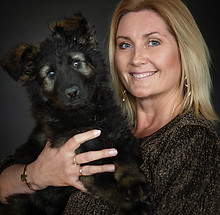
Co-founder of International Community of Anthrozoology
Dr Christine Olsen has a master's degree in ethology, higher education in special needs education and rehabilitation, and a Ph.D. in public health focusing on animal-assisted interventions. Her research is frequently cited and is rated in the top 10% of all research outputs ever tracked by Almetric. Dr. Olsen is also a dog behaviorist and trainer and screens dogs' personalities around Europe. She travels with her lectures about AAI, dog mental tests, and animal welfare as a speaker at international conferences.
Fumi Higaki
JAPAN

Professional dog trainer, Canine Behavior Consulting, and Therapy Dog Training and Evaluation.
In the US, she earned Bachelor of Science in Business Administration and a Master of Business Administration with a focus in Organizational Behavior. She is a certified canine behavior consultant from IAABC and CCPDT. She is also a Certified Therapy Dog Evaluator and Educator of Animal Assisted Education from ASAET where she teaches online courses in approaches to animal-assisted education as well as animal behavior.
As the Founder and Director of Ichinomiya Animal Assisted Education Dog Club, she works to raise awareness and to teach children about dog behavior, dog emotions, humane approach to living with them, and integrating dogs into our society as valuable social facilitators.
Testing your cat
Although the test itself is similar to the PADA-ICofA Canine test, the PADA-ICofA Feline protocol differs in several important ways. Below, you will find information on how to apply for the test.
The cat must be at least 1 year old to be tested.
1. Submit your application form
Fill out the online form to request a PADA-ICofA Feline Test. ICofA will contact you within one week after receiving your submission.
2. Complete the questionnaire
You will be asked to fill in a questionnaire about the cat being tested. You will also receive information about the available service formats (see pricing below):
-
Self-administered test: You organize, prepare, and conduct the test yourself using the official PADA-ICofA protocol.
-
Online evaluator support: You receive remote guidance from a certified PADA-ICofA Feline Evaluator to help organize and prepare the test.
-
In-person evaluator support: You receive on-site assistance from a certified PADA-ICofA Feline Evaluator. The evaluation can take place at the Evaluator’s location, or you can hire the Evaluator to travel to a location of your choice (the location must be unfamiliar to the cat)
Please note that at the moment, there are several certified PADA-ICofA Feline Evaluators worldwide: 1 in Switzerland, 1 in Norway, 2 in the Netherlands, and 1 in Japan.
3. Complete the payment. Finalize the payment for the PADA-ICofA test and the selected service format.
4. Receive the protocol. You will receive the official PADA-ICofA Feline Protocol, which explains step by step how to carry out the test and what equipment and materials you will need.
Make sure you have:
-
A cat crate familiar to the cat
-
The cat’s favorite treats
-
The cat’s favorite toys
-
A litter box with the cat’s usual litter
-
A box that is unfamiliar to the cat
-
A camera or smartphone to record the test
-
One unfamiliar room for the cat (for example, a colleague’s office or a friend’s house; minimum 15 m²)
-
Two unfamiliar people (for the cat) to help you conduct the test
-
5. Submit your test
Follow the instructions in the protocol for submitting your completed test and recordings.
5. Submit your test. Follow the instructions in the protocol for submitting your completed test and recordings.

PRICES
Self-administered test
- 175 Euro
- 85 Euro (Low Income Countries)
** + 30 Euro per video submission that do not match the criteria
Online-supported test
- 205 Euro
- 90 Euro (Low Income Countries)
Test with in-person support
- 205 Euro +Evaluator travellng costs
- 100 Euro (Low Income Countries) + Evaluator traveling costs